
Technology
行业分析
positive
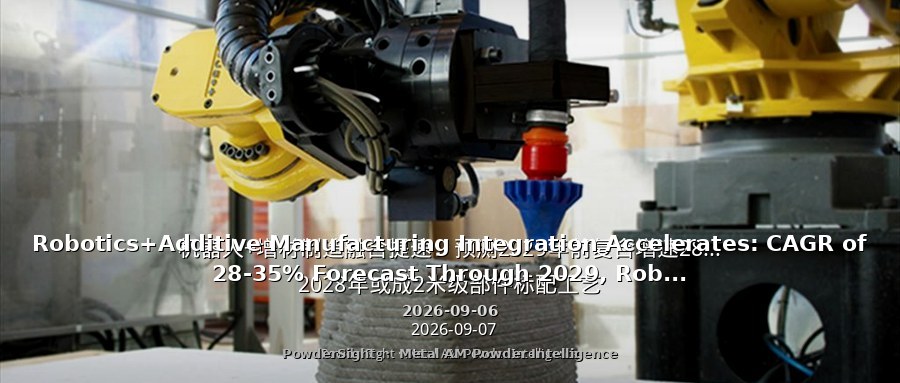
Robotics+Additive Manufacturing Integration Accelerates: CAGR of 28-35% Forecast Through 2029, Robotic AM Poised to Become Standard for 2-Meter-Scale Components by 2028
2026-09-06
Alabia Insights analysis (Sept. 6): The deep convergence of multi-axis industrial robots and additive manufacturing is projected to drive 28-35% CAGR in the robotic 3D printing market through 2029, with large-format application costs dropping 30-50%. From 2028 onward, robotic additive manufacturing is expected to become the standard process for producing components exceeding 2 meters in size. Powder-fed and wire-fed deposition routes are the primary methodologies for large-scale metal structural parts, directly boosting consumption of large-format titanium alloy, stainless steel, and nickel-based powders, while simultaneously raising requirements for powder batch-to-batch consistency.
📰 News Source
This article was translated from a Chinese source.
Source URL not available
Show Chinese original
机器人+增材制造融合提速:预测2029年前复合增速28-35%,2028年或成2米级部件标配工艺
Alabia Insights 9月6日分析:多轴工业机器人与增材制造深度绑定,预测机器人3D打印市场2029年前复合增速28-35%,大尺寸应用成本降30-50%;2028年起超2米部件制造中机器人增材将成为标准工艺。送粉/送丝路线是大尺寸金属结构件主要路线,直接拉动大尺寸钛合金、不锈钢、镍基粉末消耗,并抬高粉末批次一致性要求。